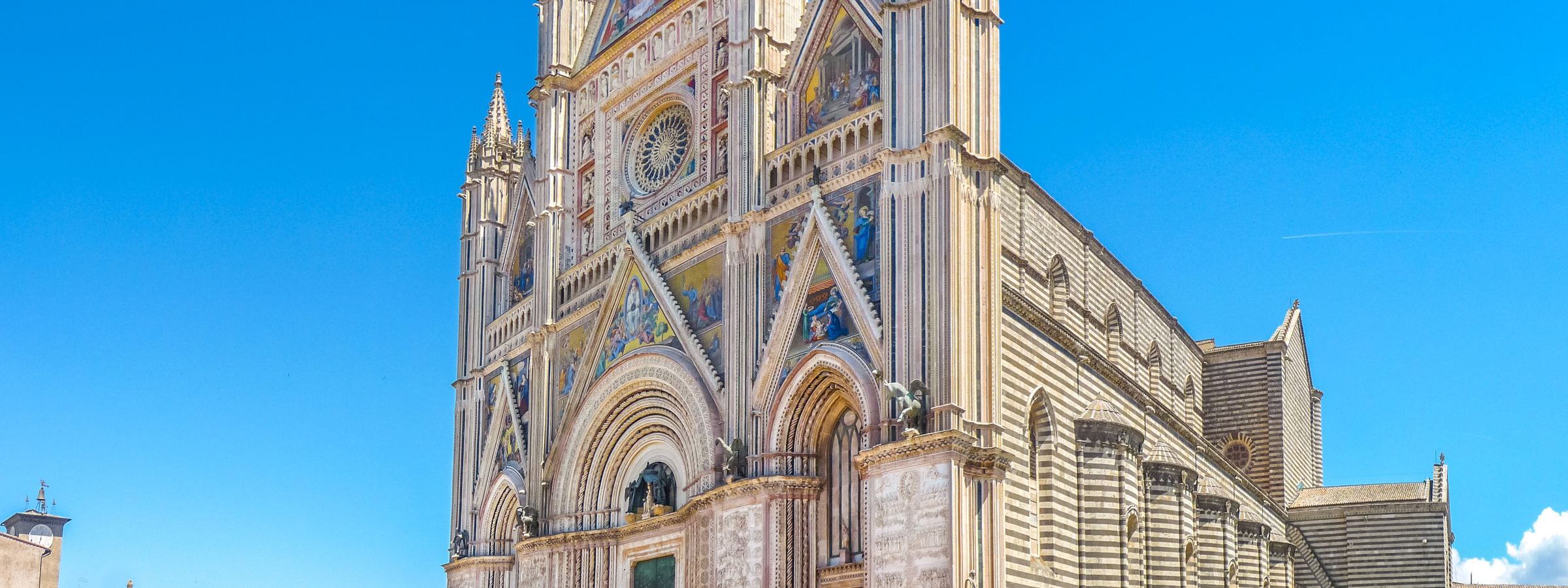
 Orvieto — Umbria · Italy →Photo: bluejayphoto / iStock
All destinations.
99 places carrying our editorial line — every one of them genuinely undertouristed, every one of them with a named editor and a real local voice.

Lonjsko Polje
Croatia's great Sava floodplain, where storks crown the timber Posavina houses and herds graze wet commons in one of Europe's last living wetlands.

Đurđevac
A Podravina market town where a medieval rooster legend, a lake of sand dunes, and the roots of Croatian naïve art meet. The crowds never arrive.

Mikulov and the Pálava
The Moravian wine capital on the Austrian border: Renaissance square, Jewish cemetery, the Pálava limestone hills, and twelve official vineyard tracts.

Třeboň
A town at the centre of a 500-year man-made pond landscape, where the autumn carp harvest is a working livelihood and the spa runs on local peat.

Valašsko (Moravian Wallachia)
The Moravian highlands where a century-old open-air museum and Jurkovič's timber chalets keep the shepherd past in plain sight.


Aubusson
Six centuries of European tapestry-weaving in a small Creuse river town: a near-dead craft brought back to working life as UNESCO intangible heritage.

Florac and the Cévennes
Capital village of the Cévennes National Park. Stevenson and his donkey came through in 1878, and the chestnut forests are still here.

Vallée de la Roya
A mountain valley behind the French Riviera, climbing from olive groves to Bronze Age rock art, its spine a single railway spiralling through the Alps to Italy.


Aliano
The village on the edge of the lunar calanchi where Carlo Levi served his exile, and where he chose to be buried.

Arezzo
A working goldsmiths' city on the Florence–Rome line, holding a Piero della Francesca masterpiece: Renaissance Tuscany at a fraction of Florence's crowds.

Carnia
The upper Friulian Alps, where the Tagliamento rises among forestry villages that speak their own language and run their own dairy.

Castelmezzano
A village glued to the Lucanian Dolomites, where the main road runs out and the path begins.

Cividale del Friuli
Where Julius Caesar's marketplace became Italy's first Lombard duchy: a UNESCO town on an emerald river at the Slovene border.

Comacchio
A canal town in the Po Delta lagoons: bridges, eels, flamingos, and a Slow Food marinating works that keeps a centuries-old eel tradition alive.

Gressoney and the Walser Lys Valley
The upper Lys Valley, where a medieval German-speaking people settled under Monte Rosa and still speak their own alpine tongue.

Modena
A UNESCO Romanesque heart and the world capital of true balsamic. Read Modena slowly, as a city of patient craft rather than racetrack speed.

Monte Isola
The largest lake island in central and southern Europe, rising from the quiet waters of Lake Iseo: car-free and ferry-reached, still fishing.

Orvieto
A flat-topped town of volcanic tufa on the Rome–Florence main line. Most visitors leave by mid-afternoon; stay a night and Orvieto becomes yours.

Parma
A graceful former ducal capital and UNESCO City of Gastronomy: a producer visit by day, the Teatro Regio by night.

Pietrapertosa
The highest village in Basilicata, split by a Saracen alley and a Norman castle, twin to Castelmezzano on the opposite cliff.

Potenza
The highest regional capital in Italy: a vertical Apennine city of escalators and lifts, with Musmeci's concrete bridge on the valley floor.

Ravenna
Eight UNESCO mosaic monuments, Dante's tomb, and a direct train line: the Carinthian Door trunk route ends here, at the western edge of the Po delta.

Salento (interior)
The deep heel of Italy, where a Greek-derived language still lives in a cluster of whitewashed villages and the whole coast empties after August.
Sappada / Plodn
A German-speaking Dolomite village of fifteen hamlets, where the Piave river is born and the Carnival masks have been carved from the same wood for centuries.
Specchia
Pale-stone alleys and walled gardens on a south-Salento hill, far enough inland that the coastal August never quite arrives.

Spoleto
An ancient hill town below a papal fortress, joined by a soaring medieval bridge to a sacred wood: one of Umbria's quietest "name" towns outside festival weeks.

Trieste, through its writers
The Habsburg-Adriatic city of Joyce, Svevo and Saba, best read in October and November, when the Bora blows and the cafés half-empty.
Valle dei Mòcheni (Bersntol)
A side valley east of Trento where a Bavarian-derived language has been spoken since the thirteenth century, and three villages still use it every day.

Verona
A busy UNESCO city read the slow way: the quiet Veronetta left bank, spring and autumn timing, a day in the Valpolicella wine hills.


Beskid Niski (Low Beskids)
The emptiest range in the Polish Carpathians: Lemko ghost villages and UNESCO wooden churches in the absence that 1947 left behind.

Kashubia (Kaszuby)
A living language island in the Pomeranian lake hills, where Kashubian is Poland's only recognised regional language and the lakes are called Switzerland.

Suwalszczyzna
Poland's wild north-east: the deepest lake in Central Europe, a glacial landscape park and the lost Yotvingian borderland, reached by Rail Baltica.


Brda (Goriška Brda)
Vine-terraced hills draped over the Slovenian-Italian border, where the Rebula grape has been a habit and an argument since the thirteenth century.

Kolpa (Bela Krajina)
Slovenia's clear-water river border with Croatia: swimming and kayak descents through birch-forest country in the country's forgotten southern corner.

Koper
Slovenia's Venetian port city: a bilingual, lived-in old town twenty kilometres from Trieste, still running at its own pace.

Kranj
Slovenia's Prešeren town: a compact medieval promontory above two river canyons, open to visitors by train on the Ljubljana–Villach corridor.

Laško
The Slovenian beer-and-thermal-water town: Heineken's largest Slovenian brewery, a 35°C mineral spring, the Pivo Cvetje festival every July.

Solčavsko
Three glacial valleys under the Kamnik-Savinja Alps, where a handful of high farms keep the Savinja company from its source at the Rinka falls.

Soča Valley
A turquoise river running south from Triglav, villages that remember a different war, and no fast road in from anywhere.

Ebro Delta
The largest western Mediterranean wetland: 320 km² of Catalan rice fields, salt pans and the world's biggest Audouin's gull colony.

Ecoparque de Trasmiera (Arnuero)
The Cantabrian coastal park of a 2,100-person municipality: three villages, two beaches, a tidal mill, and the regeneration story the EDEN award recognised.

Goierri (Idiazabal Territory)
Basque highlands where raw-milk Idiazabal ripens in farmhouse caves and a market unchanged since 1512 still opens every Wednesday beneath the Txindoki peak.
Sierra y Cañones de Guara
Spain's pre-Pyrenean canyon country: stone villages above limestone gorges and painted rock shelters beside the rivers where European canyoning began.
Tierra Ignaciana
Ignatius's birthplace and the starting line of the 650 km Camino Ignaciano, in the Basque hills around the Jesuit-Baroque Sanctuary of Loyola.