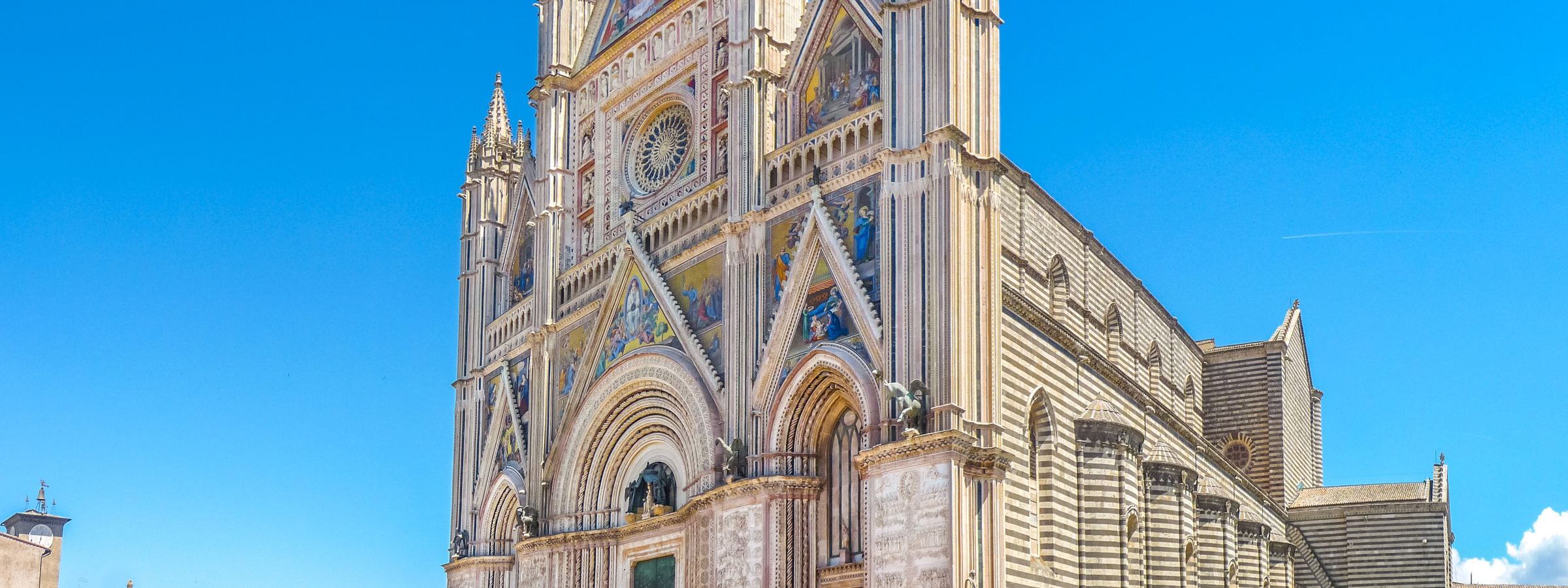
 Orvieto — Umbria · Italy →Photo: bluejayphoto / iStock
All destinations.
99 places carrying our editorial line — every one of them genuinely undertouristed, every one of them with a named editor and a real local voice.


Florac and the Cévennes
Capital village of the Cévennes National Park. Stevenson and his donkey came through in 1878, and the chestnut forests are still here.

The Aubrac
A high basalt plateau where Aubrac herds still walk up to summer pasture each May, past burons, aligot pots and the Le Puy Camino.


Arezzo
A working goldsmiths' city on the Florence–Rome line, holding a Piero della Francesca masterpiece: Renaissance Tuscany at a fraction of Florence's crowds.

Modena
A UNESCO Romanesque heart and the world capital of true balsamic. Read Modena slowly, as a city of patient craft rather than racetrack speed.

Norcia & Monti Sibillini
Saint Benedict's hometown under the Sibillini ridge, rebuilding since the 2016 earthquake; the Castelluccio lentils still flower every July.

Parma
A graceful former ducal capital and UNESCO City of Gastronomy: a producer visit by day, the Teatro Regio by night.
Specchia
Pale-stone alleys and walled gardens on a south-Salento hill, far enough inland that the coastal August never quite arrives.

Tratturo Magno
Italy's greatest droving road: 244 km of grass highway from L'Aquila to Foggia, anchored at Castel del Monte, shepherd capital of the Gran Sasso.

Verona
A busy UNESCO city read the slow way: the quiet Veronetta left bank, spring and autumn timing, a day in the Valpolicella wine hills.


Aldeias do Xisto
A network of 27 restored schist villages in interior Portugal: grey-brown stone, slate roofs and river beaches, rebuilt to reverse rural depopulation.

São Brás de Alportel
Ten kilometres above the Algarve's busiest beaches, a plain working town that once corked half the world's wine — and still smells faintly of boiled bark.

