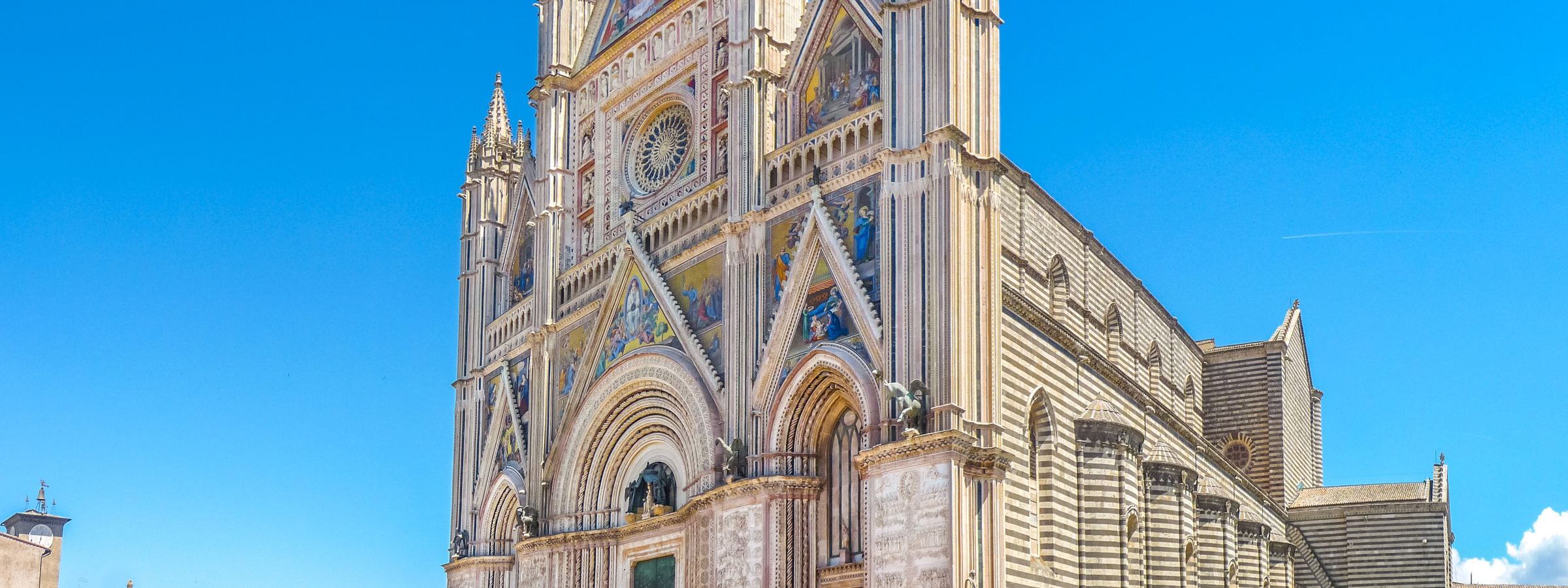
 Orvieto — Umbria · Italy →Photo: bluejayphoto / iStock
All destinations.
99 places carrying our editorial line — every one of them genuinely undertouristed, every one of them with a named editor and a real local voice.


Mikulov and the Pálava
The Moravian wine capital on the Austrian border: Renaissance square, Jewish cemetery, the Pálava limestone hills, and twelve official vineyard tracts.

Nový Bor
Two Bohemian glass towns still at work: furnaces you can stand over, Europe's oldest glass schools, and a basalt organ with no queue.


Gressoney and the Walser Lys Valley
The upper Lys Valley, where a medieval German-speaking people settled under Monte Rosa and still speak their own alpine tongue.
Sappada / Plodn
A German-speaking Dolomite village of fifteen hamlets, where the Piave river is born and the Carnival masks have been carved from the same wood for centuries.

Trieste, through its writers
The Habsburg-Adriatic city of Joyce, Svevo and Saba, best read in October and November, when the Bora blows and the cafés half-empty.


Beskid Niski (Low Beskids)
The emptiest range in the Polish Carpathians: Lemko ghost villages and UNESCO wooden churches in the absence that 1947 left behind.

Kashubia (Kaszuby)
A living language island in the Pomeranian lake hills, where Kashubian is Poland's only recognised regional language and the lakes are called Switzerland.

Suwalszczyzna
Poland's wild north-east: the deepest lake in Central Europe, a glacial landscape park and the lost Yotvingian borderland, reached by Rail Baltica.

