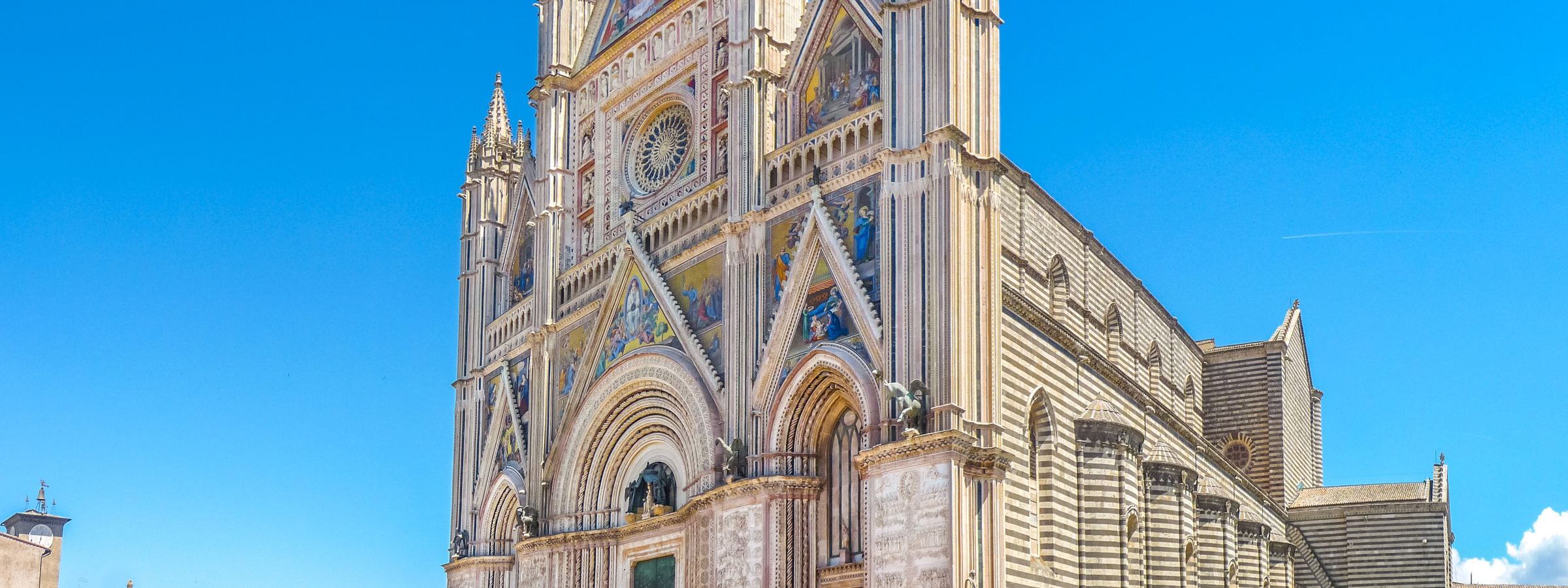
 Orvieto — Umbria · Italy →Photo: bluejayphoto / iStock
All destinations.
99 places carrying our editorial line — every one of them genuinely undertouristed, every one of them with a named editor and a real local voice.


Florac and the Cévennes
Capital village of the Cévennes National Park. Stevenson and his donkey came through in 1878, and the chestnut forests are still here.

Vallée de la Roya
A mountain valley behind the French Riviera, climbing from olive groves to Bronze Age rock art, its spine a single railway spiralling through the Alps to Italy.


Carnia
The upper Friulian Alps, where the Tagliamento rises among forestry villages that speak their own language and run their own dairy.

Castelmezzano
A village glued to the Lucanian Dolomites, where the main road runs out and the path begins.

Monte Isola
The largest lake island in Italy, rising from the quiet waters of Lake Iseo: car-free and ferry-reached, still fishing.

Pietrapertosa
The highest village in Basilicata, split by a Saracen alley and a Norman castle, twin to Castelmezzano on the opposite cliff.
Valle dei Mòcheni (Bersntol)
A side valley east of Trento where a Bavarian-derived language has been spoken since the thirteenth century, and three villages still use it every day.


Kolpa (Bela Krajina)
Slovenia's clear-water river border with Croatia: swimming and kayak descents through birch-forest country in the country's forgotten southern corner.

Kranj
Slovenia's Prešeren town: a compact medieval promontory above two river canyons, open to visitors by train on the Ljubljana–Villach corridor.

Solčavsko
Three glacial valleys under the Kamnik-Savinja Alps, where a handful of high farms keep the Savinja company from its source at the Rinka falls.

Soča Valley
A turquoise river running south from Triglav, villages that remember a different war, and no fast road in from anywhere.
Sierra y Cañones de Guara
Spain's pre-Pyrenean canyon country: stone villages above limestone gorges and painted rock shelters beside the rivers where European canyoning began.
Tierra Ignaciana
Ignatius's birthplace and the starting line of the 650 km Camino Ignaciano, in the Basque hills around the Jesuit-Baroque Sanctuary of Loyola.