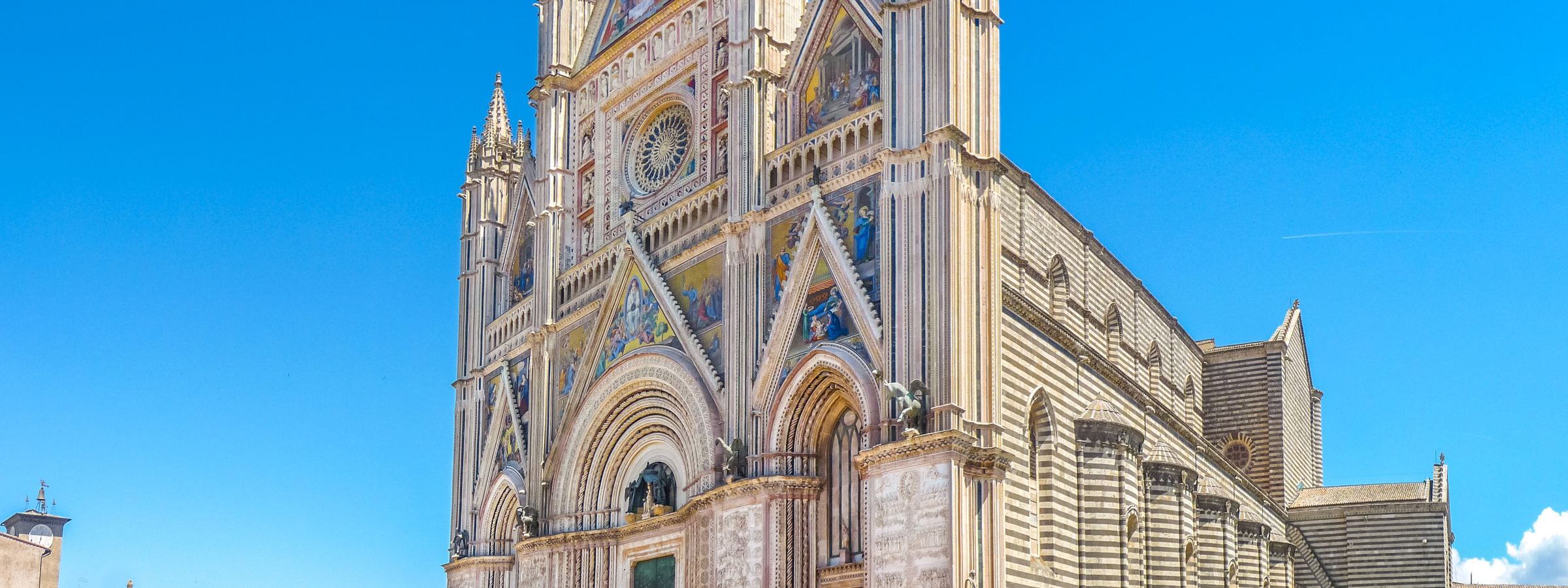
 Orvieto — Umbria · Italy →Photo: bluejayphoto / iStock
All destinations.
99 places carrying our editorial line — every one of them genuinely undertouristed, every one of them with a named editor and a real local voice.


Cividale del Friuli
Where Julius Caesar's marketplace became Italy's first Lombard duchy: a UNESCO town on an emerald river at the Slovene border.
Sappada / Plodn
A German-speaking Dolomite village of fifteen hamlets, where the Piave river is born and the Carnival masks have been carved from the same wood for centuries.

Trieste, through its writers
The Habsburg-Adriatic city of Joyce, Svevo and Saba, best read in October and November, when the Bora blows and the cafés half-empty.
Valle dei Mòcheni (Bersntol)
A side valley east of Trento where a Bavarian-derived language has been spoken since the thirteenth century, and three villages still use it every day.


Beskid Niski (Low Beskids)
The emptiest range in the Polish Carpathians: Lemko ghost villages and UNESCO wooden churches in the absence that 1947 left behind.

Kashubia (Kaszuby)
A living language island in the Pomeranian lake hills, where Kashubian is Poland's only recognised regional language and the lakes are called Switzerland.

Suwalszczyzna
Poland's wild north-east: the deepest lake in Central Europe, a glacial landscape park and the lost Yotvingian borderland, reached by Rail Baltica.

Kolpa (Bela Krajina)
Slovenia's clear-water river border with Croatia: swimming and kayak descents through birch-forest country in the country's forgotten southern corner.

Koper
Slovenia's Venetian port city: a bilingual, lived-in old town twenty kilometres from Trieste, still running at its own pace.