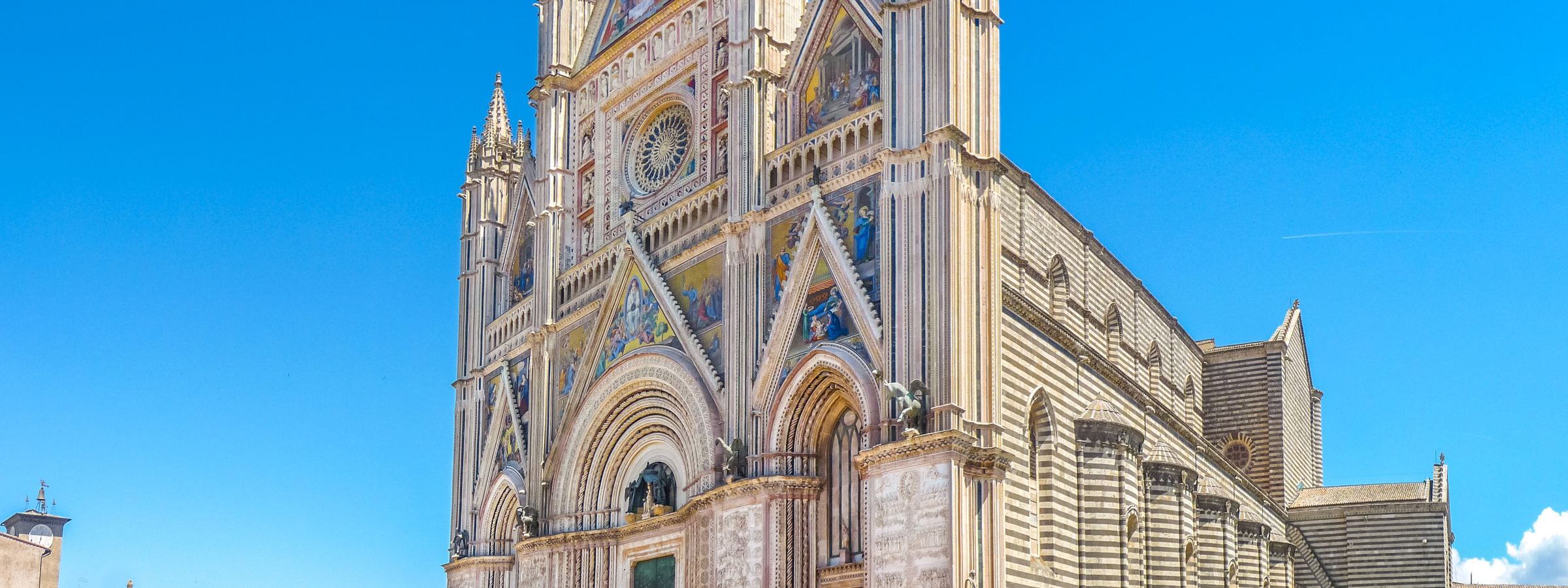
 Orvieto — Umbria · Italy →Photo: bluejayphoto / iStock
All destinations.
99 places carrying our editorial line — every one of them genuinely undertouristed, every one of them with a named editor and a real local voice.


Florac and the Cévennes
Capital village of the Cévennes National Park. Stevenson and his donkey came through in 1878, and the chestnut forests are still here.
Saint-Junien
France's glove town: couture leather cut by hand beside the Vienne, a Romanesque collegiate church, Corot's riverbank — and very few other visitors.

The Aubrac
A high basalt plateau where Aubrac herds still walk up to summer pasture each May, past burons, aligot pots and the Le Puy Camino.


Miranda do Douro
The Portuguese border city where Mirandese is spoken: a 7,000-person Asturleonese language island on the cliffs above the Douro.

Mértola
A fortified spur where the Guadiana meets the Oeiras: Portugal's richest window onto Al-Andalus, with the country's only surviving medieval mosque.

Horezu
The Oltenian market town where the rooster plate is still thrown, horned and painted in family yards — with Brâncoveanu's finest monastery 3 km away.

Maramureș
Romania's living peasant north: UNESCO wooden churches, carved gates, the painted Merry Cemetery, and a forestry steam train up the Vaser valley.


Laško
The Slovenian beer-and-thermal-water town: Heineken's largest Slovenian brewery, a 35°C mineral spring, the Pivo Cvetje festival every July.

Podčetrtek
On the Slovenian-Croatian border: one of the country's biggest thermal spas, a medieval castle reopened in 2024, a Pauline monastery pharmacy from 1675.

Ecoparque de Trasmiera (Arnuero)
The Cantabrian coastal park of a 2,100-person municipality: three villages, two beaches, a tidal mill, and the regeneration story the EDEN award recognised.
Tierra Ignaciana
Ignatius's birthplace and the starting line of the 650 km Camino Ignaciano, in the Basque hills around the Jesuit-Baroque Sanctuary of Loyola.