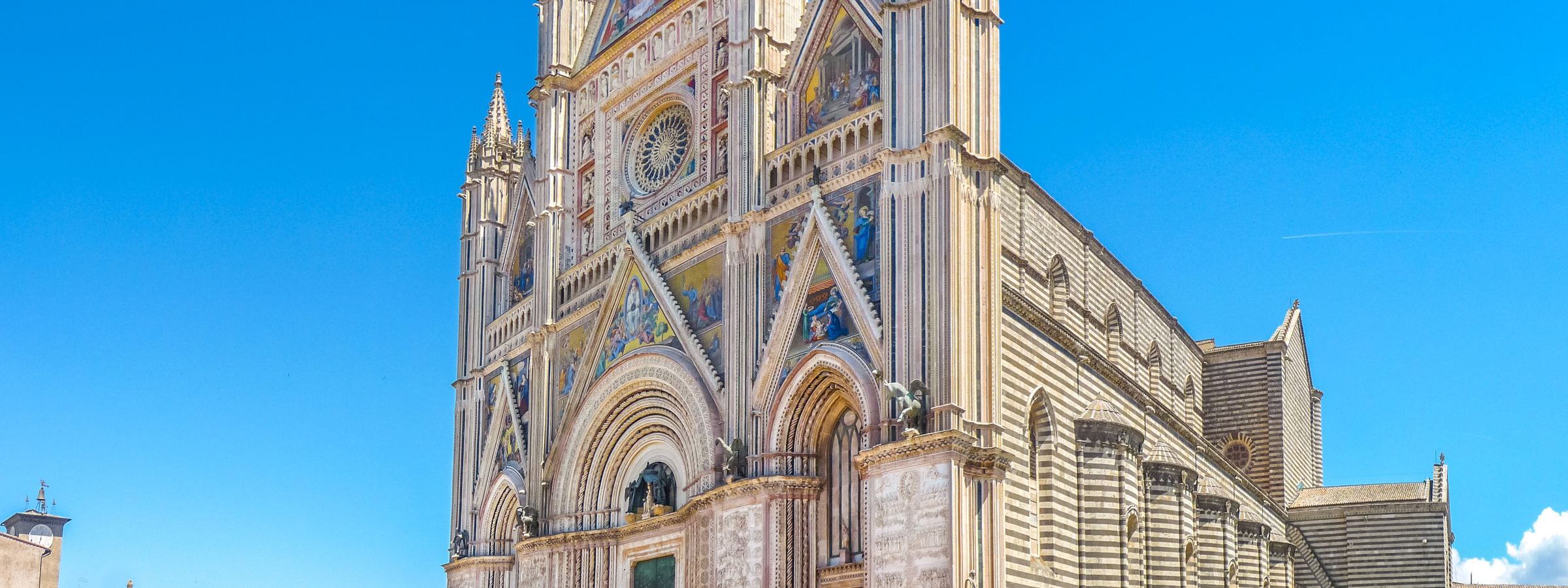
 Orvieto — Umbria · Italy →Photo: bluejayphoto / iStock
All destinations.
99 places carrying our editorial line — every one of them genuinely undertouristed, every one of them with a named editor and a real local voice.


Florac and the Cévennes
Capital village of the Cévennes National Park. Stevenson and his donkey came through in 1878, and the chestnut forests are still here.

The Aubrac
A high basalt plateau where Aubrac herds still walk up to summer pasture each May, past burons, aligot pots and the Le Puy Camino.


Grevena
A Pindus capital famous across Greece for wild mushrooms, with Vlach pastoral villages and Ottoman-era stone bridges over the mountain rivers.

Metsovo
A Vlach town at 1,150 m in the Pindos: flocks still move with the seasons, Aromanian is spoken on the square, and the town dairy smokes its own PDO cheese.


Burren Food Trail
A network of farmhouse cheesemakers, smokehouses, oyster beds and chef-led kitchens mapped across the grey limestone karst of north County Clare.

Clonakilty
A West Cork market town built on black pudding, Michael Collins's birthplace, and a pub that drew Ireland's best traditional players for forty years.

Arezzo
A working goldsmiths' city on the Florence–Rome line, holding a Piero della Francesca masterpiece: Renaissance Tuscany at a fraction of Florence's crowds.

Carnia
The upper Friulian Alps, where the Tagliamento rises among forestry villages that speak their own language and run their own dairy.

Comacchio
A canal town in the Po Delta lagoons: bridges, eels, flamingos, and a Slow Food marinating works that keeps a centuries-old eel tradition alive.

Corinaldo
A near-complete circuit of medieval brick walls above the Verdicchio hills — one of central Italy's best-preserved borghi, overlooked for the coast.
Maniago
Italy's knife town since the 1400s: water-powered forges, a museum in an old cutlery factory, workshops still grinding steel — and a railway back to life.

Modena
A UNESCO Romanesque heart and the world capital of true balsamic. Read Modena slowly, as a city of patient craft rather than racetrack speed.

Norcia & Monti Sibillini
Saint Benedict's hometown under the Sibillini ridge, rebuilding since the 2016 earthquake; the Castelluccio lentils still flower every July.

Parma
A graceful former ducal capital and UNESCO City of Gastronomy: a producer visit by day, the Teatro Regio by night.

Penisola del Sinis – Mal di Ventre
Quiet western Sardinia: a quartz-beached peninsula, one of Europe's largest lagoons, Phoenician Tharros, and the Giants of Mont'e Prama.

Potenza
The highest regional capital in Italy: a vertical Apennine city of escalators and lifts, with Musmeci's concrete bridge on the valley floor.
Specchia
Pale-stone alleys and walled gardens on a south-Salento hill, far enough inland that the coastal August never quite arrives.

Tratturo Magno
Italy's greatest droving road: 244 km of grass highway from L'Aquila to Foggia, anchored at Castel del Monte, shepherd capital of the Gran Sasso.

Verona
A busy UNESCO city read the slow way: the quiet Veronetta left bank, spring and autumn timing, a day in the Valpolicella wine hills.


Aldeias do Xisto
A network of 27 restored schist villages in interior Portugal: grey-brown stone, slate roofs and river beaches, rebuilt to reverse rural depopulation.

São Brás de Alportel
Ten kilometres above the Algarve's busiest beaches, a plain working town that once corked half the world's wine — and still smells faintly of boiled bark.


A Guarda
A working lobster port at the mouth of the Miño, with an Iron-Age Celtic hillfort above and Portugal visible across the water.

Ebro Delta
The largest western Mediterranean wetland: 320 km² of Catalan rice fields, salt pans and the world's biggest Audouin's gull colony.

Goierri (Idiazabal Territory)
Basque highlands where raw-milk Idiazabal ripens in farmhouse caves and a market unchanged since 1512 still opens every Wednesday beneath the Txindoki peak.