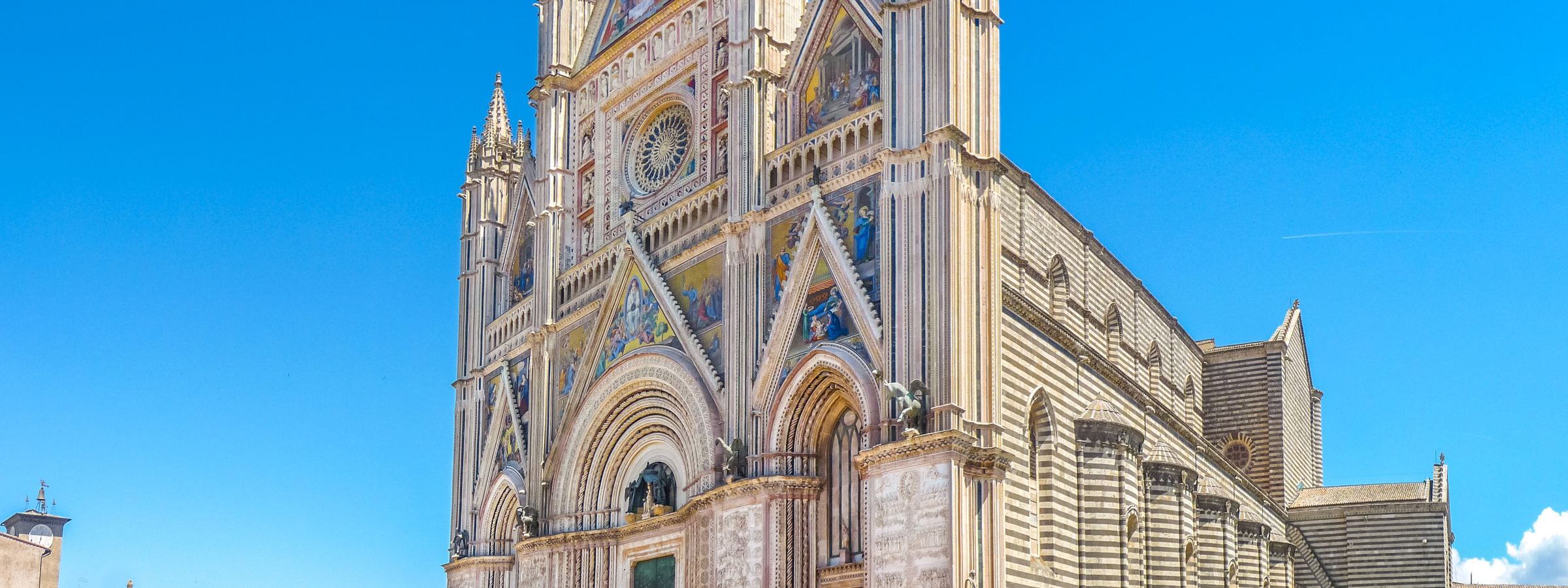
 Orvieto — Umbria · Italy →Photo: bluejayphoto / iStock
All destinations.
99 places carrying our editorial line — every one of them genuinely undertouristed, every one of them with a named editor and a real local voice.


Mikulov and the Pálava
The Moravian wine capital on the Austrian border: Renaissance square, Jewish cemetery, the Pálava limestone hills, and twelve official vineyard tracts.

Nový Bor
Two Bohemian glass towns still at work: furnaces you can stand over, Europe's oldest glass schools, and a basalt organ with no queue.


Cividale del Friuli
Where Julius Caesar's marketplace became Italy's first Lombard duchy: a UNESCO town on an emerald river at the Slovene border.
Luserna / Lusérn
A plateau village of 263 people above the Astico valley, where Cimbrian, a medieval Bavarian dialect, is still the everyday language of the street.
Valle dei Mòcheni (Bersntol)
A side valley east of Trento where a Bavarian-derived language has been spoken since the thirteenth century, and three villages still use it every day.

Beskid Niski (Low Beskids)
The emptiest range in the Polish Carpathians: Lemko ghost villages and UNESCO wooden churches in the absence that 1947 left behind.

Bieszczady
Poland's emptiest mountains, where the połoniny grasslands open above old-growth forest and ghost orchards mark villages erased in 1947.


Kolpa (Bela Krajina)
Slovenia's clear-water river border with Croatia: swimming and kayak descents through birch-forest country in the country's forgotten southern corner.

Koper
Slovenia's Venetian port city: a bilingual, lived-in old town twenty kilometres from Trieste, still running at its own pace.