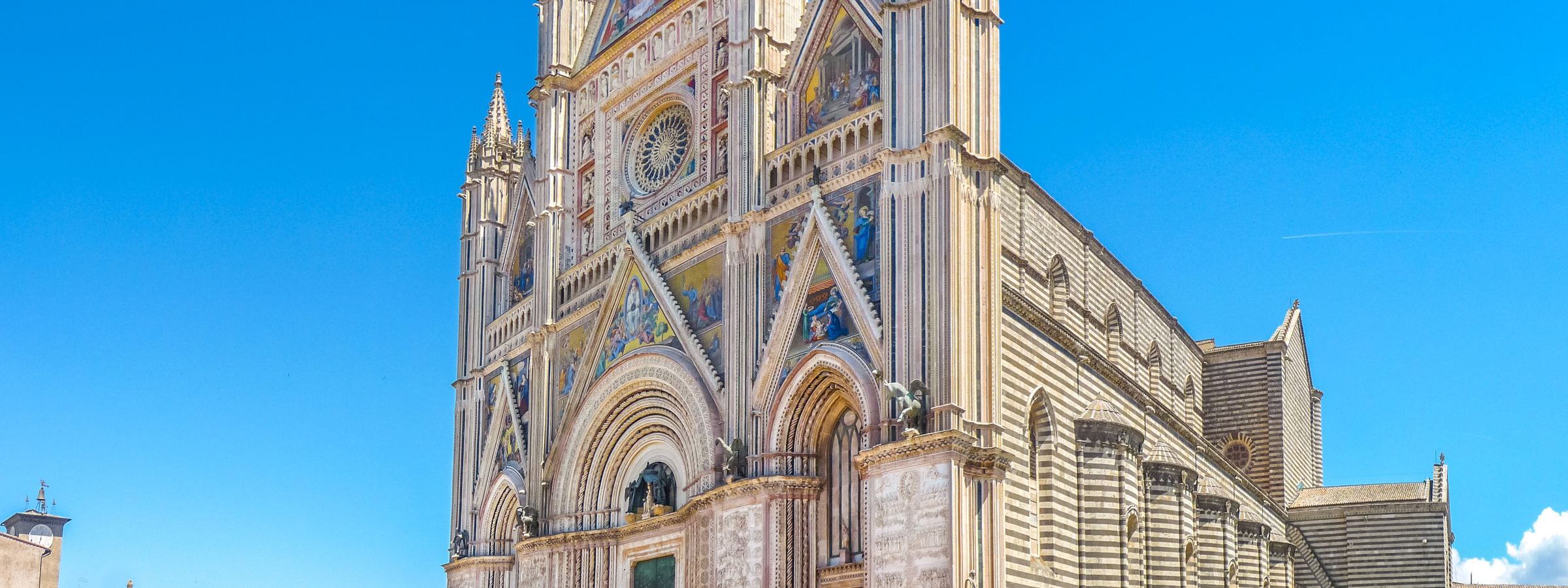
 Orvieto — Umbria · Italy →Photo: bluejayphoto / iStock
All destinations.
99 places carrying our editorial line — every one of them genuinely undertouristed, every one of them with a named editor and a real local voice.


Florac and the Cévennes
Capital village of the Cévennes National Park. Stevenson and his donkey came through in 1878, and the chestnut forests are still here.

Vallée de la Roya
A mountain valley behind the French Riviera, climbing from olive groves to Bronze Age rock art, its spine a single railway spiralling through the Alps to Italy.

Vercors
A vast limestone plateau in the pre-Alps with no railway, great caves, AOP blue cheese, and one of the heaviest Resistance memory-landscapes in France.

Grevena
A Pindus capital famous across Greece for wild mushrooms, with Vlach pastoral villages and Ottoman-era stone bridges over the mountain rivers.

Trikala
Gateway to Meteora, birthplace of Asclepius, Greece's first "smart city": all three at once, on the rail line through Thessaly.

Carnia
The upper Friulian Alps, where the Tagliamento rises among forestry villages that speak their own language and run their own dairy.

Castelmezzano
A village glued to the Lucanian Dolomites, where the main road runs out and the path begins.
Luserna / Lusérn
A plateau village of 263 people above the Astico valley, where Cimbrian, a medieval Bavarian dialect, is still the everyday language of the street.

Monte Isola
The largest lake island in Italy, rising from the quiet waters of Lake Iseo: car-free and ferry-reached, still fishing.

Norcia & Monti Sibillini
Saint Benedict's hometown under the Sibillini ridge, rebuilding since the 2016 earthquake; the Castelluccio lentils still flower every July.

Pietrapertosa
The highest village in Basilicata, split by a Saracen alley and a Norman castle, twin to Castelmezzano on the opposite cliff.

Tratturo Magno
Italy's greatest droving road: 244 km of grass highway from L'Aquila to Foggia, anchored at Castel del Monte, shepherd capital of the Gran Sasso.
Valle dei Mòcheni (Bersntol)
A side valley east of Trento where a Bavarian-derived language has been spoken since the thirteenth century, and three villages still use it every day.

Beskid Niski (Low Beskids)
The emptiest range in the Polish Carpathians: Lemko ghost villages and UNESCO wooden churches in the absence that 1947 left behind.

Bieszczady
Poland's emptiest mountains, where the połoniny grasslands open above old-growth forest and ghost orchards mark villages erased in 1947.


Kranj
Slovenia's Prešeren town: a compact medieval promontory above two river canyons, open to visitors by train on the Ljubljana–Villach corridor.

Solčavsko
Three glacial valleys under the Kamnik-Savinja Alps, where a handful of high farms keep the Savinja company from its source at the Rinka falls.

Soča Valley
A turquoise river running south from Triglav, villages that remember a different war, and no fast road in from anywhere.

Sierra de las Nieves
A national park of ancient fir forests and white Andalusian villages, rising from the back of Marbella into mountains most Costa del Sol visitors never see.
Sierra y Cañones de Guara
Spain's pre-Pyrenean canyon country: stone villages above limestone gorges and painted rock shelters beside the rivers where European canyoning began.
Tierra Ignaciana
Ignatius's birthplace and the starting line of the 650 km Camino Ignaciano, in the Basque hills around the Jesuit-Baroque Sanctuary of Loyola.
Valle del Ambroz
A valley below the Sierra de Béjar where a medieval Jewish quarter, Roman thermal baths and chestnut forests draw visitors with no interest in a crowd.